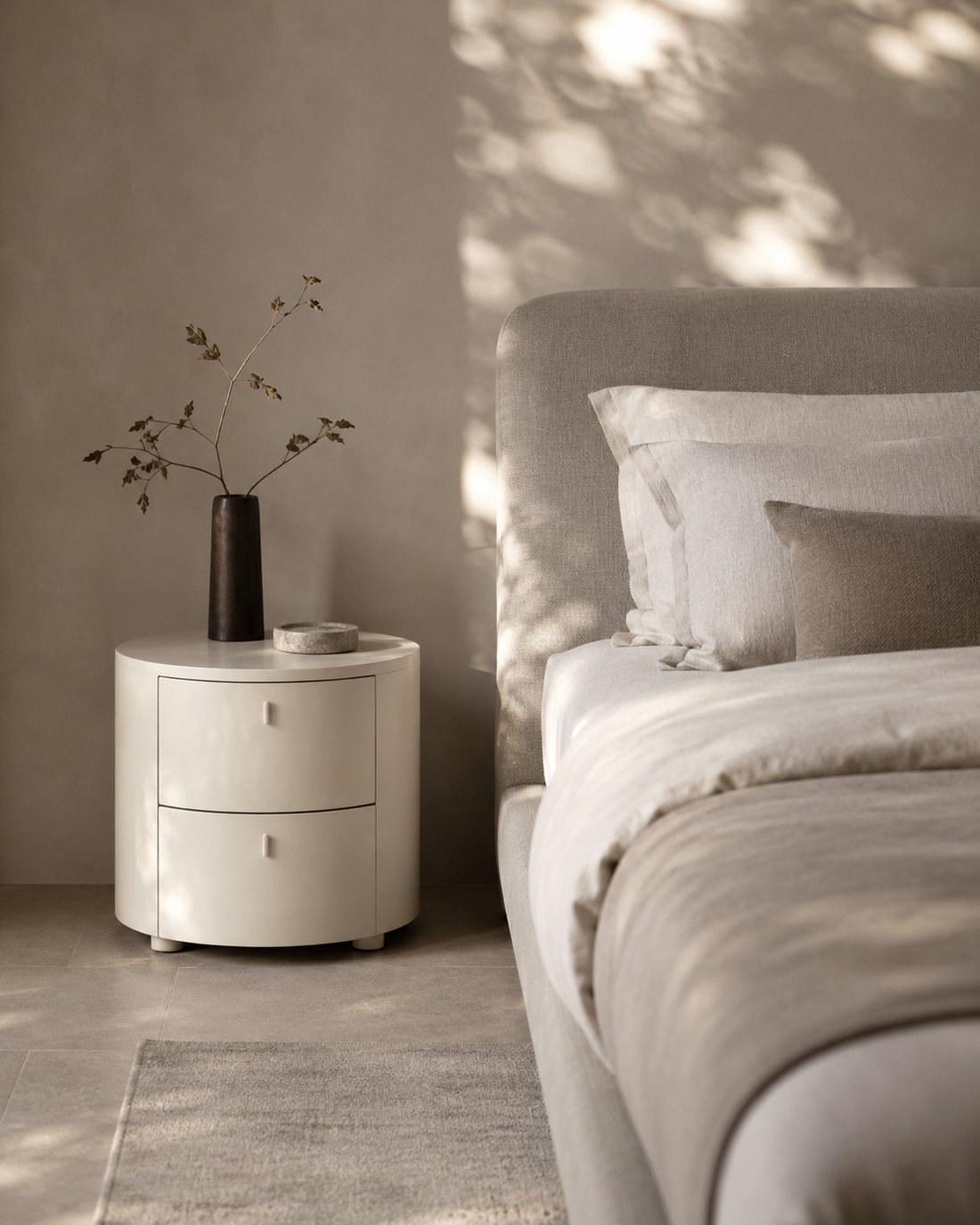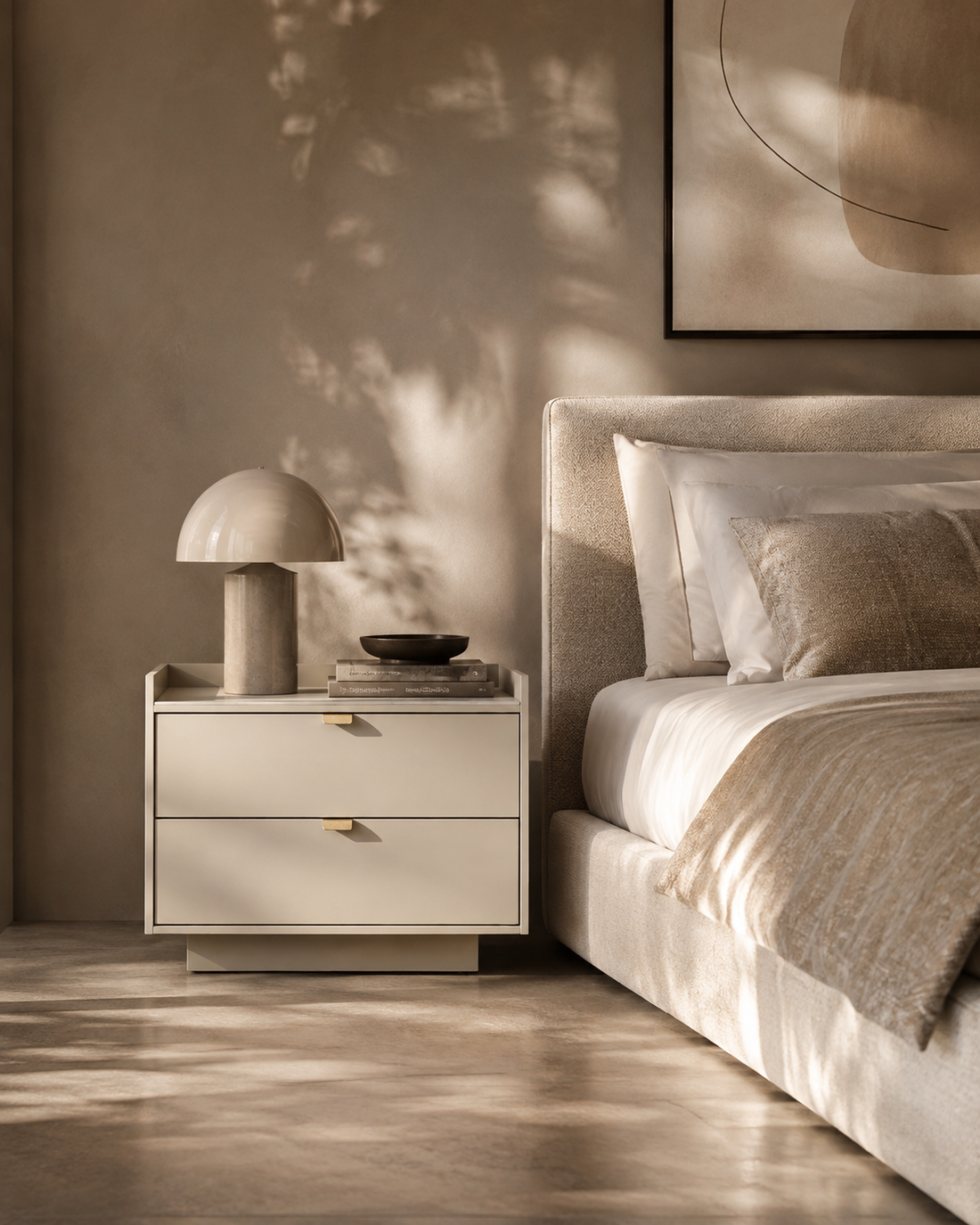
Table nests are a set of two or more tables designed to nest together — one sliding under the other — combining flexible functionality with refined design. Ideal for living rooms, snug corners and multi‑purpose interiors, table nests maximise surface utility without occupying permanent floor space. Their adaptable nature allows them to serve as side tables, coffee tables or occasional surfaces across a range of room layouts and scales.
Interior designers and independent retailers value table nests because they solve practical needs with thoughtful proportions and style. Whether crafted from timber, metal, glass or mixed materials, these coordinated pieces introduce depth and versatility to seating zones while maintaining refined aesthetic presence.
What Are Table Nests?
Table nests describe a coordinated group of two or more tables that fit together when not fully in use. Typically, each table is slightly smaller than the last, allowing them to stack or “nest” beneath one another. This design supports both compact living and flexible entertaining: use them together for layered display surfaces, separate them to support guests or move them into adjacent zones as needed.
Key characteristics of table nests include:
-
Graduated sizing so pieces fit efficiently together
-
Versatile surfaces suitable for drinks, books, décor and everyday use
-
Coordinated design language that unifies the set
-
Proportionate scale appropriate for both contemporary and traditional interiors
For trade professionals, table nests offer an elegant solution where function meets visual balance.
Materials and Craftsmanship
The appeal of table nests lies not just in their adaptability but in the quality of materials and workmanship behind them. Premium construction enhances longevity, tactile quality and overall aesthetic.
Solid Wood and Veneer – Timbers such as oak, walnut or ash provide tactile warmth and age gracefully. Veneer finishes allow for consistent grain patterns across each table in the nest.
Metal Frames – Slim powder‑coated steel, brass or blackened metal supports deliver structural integrity and a refined silhouette, ideal for contemporary interiors.
Glass or Stone Tops – Tempered glass or stone surfaces introduce visual lightness or subtle luxury, respectively, while remaining durable for everyday use.
Mixed Finishes – Combining materials — for example, a timber top with a metal base — broadens styling potential and reinforces design cohesion.
Detail‑led corners, edge profiles and joint quality distinguish premium table nests, making them perform both visually and functionally in interior schemes.
Why Choose Table Nests?
Table nests are popular because they resolve common spatial and functional challenges without compromising style. They:
-
Optimise Space — Nesting design reduces footprint when tables aren’t needed independently.
-
Offer Flexible Surfaces — Perfect for drinks, lamps, vases and everyday essentials.
-
Enhance Layered Interiors — Multiple tables create visual layering and dynamic staging.
-
Coordinate Across Rooms — A set can serve various roles in living rooms, bedrooms and lounges.
For interior designers, this means freedom to craft flexible layouts. For independent retailers, table nests appeal to customers seeking practical solutions that also elevate interior schemes.
Styling with Table Nests
Trade professionals often recommend styling table nests in ways that balance function with curated softness:
Layer Surfaces – Place a low tray or stack of books on the larger table, with a small plant or candle on the smaller nest to create intentional groupings.
Coordinate with Seating – Position table nests adjacent to sofas or chairs, using them for lamps or to hold refreshments during gatherings.
Integrate Textures – A mix of materials — woven baskets beneath a timber nest, a decorative bowl on a glass‑topped table — enriches tactile narratives.
Adapt to Function – Move the smaller table beside an armchair or into a breakfast nook when extra surface is needed.
By demonstrating these styling scenarios, retailers help customers visualise the versatility and everyday utility of table nests.
Table Nests in Retail and Commercial Contexts
Independent retailers benefit from offering table nests because they appeal to a wide range of customers — from first‑time buyers in compact homes to seasoned decorators seeking layered interiors. Table nests perform well when merchandised alongside seating collections, lighting and home accessories.
In hospitality and commercial interiors such as lounges or boutique hotel suites, table nests support flexible guest needs, acting as occasional surfaces during breakfast hours or evening socialising. Their adaptability aligns with designs where multi‑functional space planning is essential.
Retailers who position table nests as part of coordinated room sets — for example, with matching sofas, lighting and décor — encourage broader customer engagement and increase average basket values.
Trade & Wholesale Opportunities for Table Nests
Tommy Franks is a favourite among interior designers and independent retailers seeking premium furniture solutions like table nests that deliver design integrity and commercial viability. Through a carefully curated range, trade partners access versatile tables that feel considered and adaptable across briefs.
A vast range of UK‑held stock means designers and retailers can specify and order with confidence, reducing reliance on extended overseas lead times. With free UK delivery on all items, logistics are streamlined and project or retail margins are protected. Crucially, there is no minimum order value, allowing studios, boutiques and smaller retailers to order single sets or broader assortments without unnecessary upfront commitment.
Trade accounts are welcome and easy to set up, granting professionals access to trade‑only pricing, real‑time stock visibility and dedicated support — features that matter when sourcing versatile pieces like table nests.
For independent retailers, competitive wholesale margins support strong resale pricing, while designers benefit from products that align with premium briefs without compromising commercial sense.
How to Choose the Right Table Nests
Selecting table nests involves balancing proportion, material and context:
Scale Relative to Seating – Ensure the largest table aligns with sofa height or adjacent furniture for ergonomic usability.
Material Compatibility – Choose materials that harmonise with other pieces in the scheme — timber nests with wooden chairs, metal frames with contemporary hardware.
Finish and Texture – Consider grain, colour and surface quality to ensure the tables feel intentional and refined within the broader palette.
Functional Needs – Evaluate how often tables will be used independently versus nested.
By considering these factors, trade professionals help clients and customers select sets that feel purposeful, balanced and enduring.
Positioning Table Nests in the UK Market
In the UK, interiors are increasingly curated to feel lived‑in yet refined. Table nests resonate because they offer an intelligent combination of style and adaptability. Retailers who present these sets within contextual displays — for example, beside sofas or under pendant lighting — enable customers to see them in real‑world use, enhancing confidence and purchase intent.
Interior designers use table nests to articulate layered living schemes where flexibility and proportion matter. Because these tables can adapt to changing needs and settings, they align with UK interiors that prioritise both comfort and design finesse.
Why Choose Tommy Franks?
Tommy Franks offers a refined selection of table nests that reflect premium craftsmanship, purposeful design and commercial awareness. Interior designers appreciate pieces that balance material quality, proportion and everyday functionality — enabling them to integrate table nests seamlessly into curated schemes. Independent retailers benefit from collections that feel premium yet accessible to discerning customers.
With free UK delivery on all items and no minimum order value, trade partners can make purchasing decisions that support flexible project scopes or agile retail strategies. The reliable UK supply chain and vast range of UK‑held stock minimise procurement uncertainty, while competitive wholesale margins sustain healthy resale pricing.
Trade account onboarding is straightforward, granting professionals access to trade‑only pricing, stock visibility and responsive support — all features that matter when sourcing table nests for the competitive UK market.